




Cantilever Rack Selection and Safety Guide
Work through capacities, layouts, and safety practices for a cantilever rack system.
Read the Guide →


Answers to common questions about sizing, configuring, and installing cantilever racking systems.
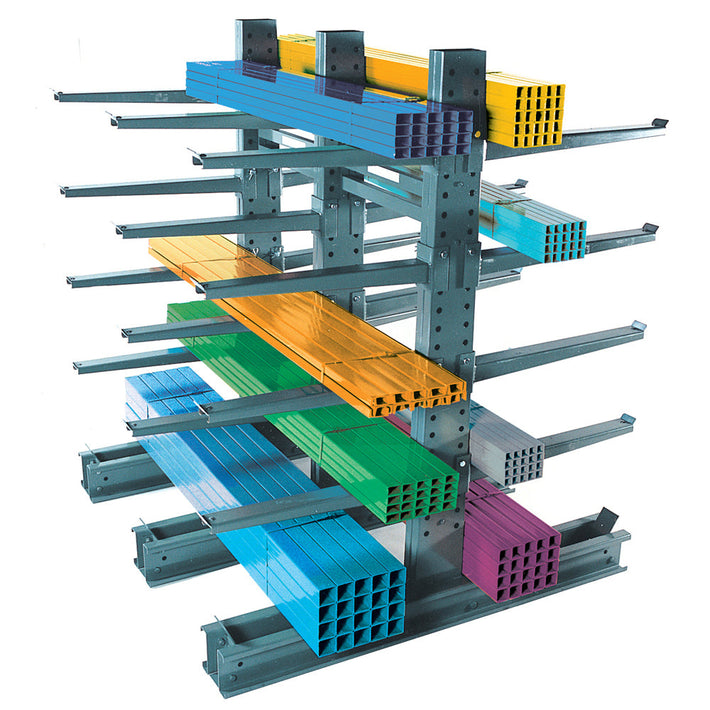
Each bay needs two uprights, and every added bay needs one more upright plus a brace set. Starter units include two uprights, and add-on units include one, so you can extend a row as your storage grows.
Straight arms hold flat, stable loads like lumber, plywood, sheet metal, and boxed goods. Inclined arms angle upward (20 degrees on MECO heavy duty arms) to keep pipe, conduit, and tubing from rolling forward. Red Steel galvanized racks use straight arms with optional arm stops.
Divide the total weight on a level by the number of arms supporting it. For example, a 3,000 lb load resting on 3 arms needs arms rated for at least 1,000 lbs each. Ratings assume the load is evenly distributed.
As a general guide, a load should overhang the end arms by about half the distance between uprights. That spreads the weight evenly across the arms and helps prevent the load from bowing.
Brace length sets the distance between uprights, so choose it based on the length of your materials and how many arms should support them. The number of braces each bay needs depends on upright height and is listed on each product page.
Yes. Cantilever uprights are freestanding and should be anchored to a level concrete floor. Don't attach them to walls, building columns, or other structures.
Reach out if you're planning several rows, loads near the arm ratings, or racks taller than 12'. Our cantilever and bulk storage buying guide covers more planning details. We offer free site visits and consultations, and we install jobs nationwide.
We don’t just sell stellar shelves. We design custom organized spaces that fit your needs, large or small.
We Can Help YouWe don’t just sell stellar shelves. We design custom organized spaces that fit your needs, large or small.
We Can Help You