


Positive, Synchronized Movement
The roller-to-roller chain drive helps keep loads moving consistently across the conveyor line. This is especially useful when moving heavier products that need stable control during starts, stops, and transfers.
A chain driven live roller conveyor is a heavy-duty powered roller conveyor designed to move pallets, drums, metal bins, containers, wheels, and dense industrial products through manufacturing, shipping, and material handling environments.
Its roller-to-roller chain drive provides positive, synchronized movement for heavier loads where durability, control, and consistent transfer are critical.
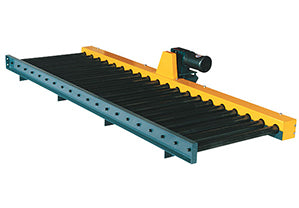
Chain driven live roller conveyor systems are built for applications where lighter-duty conveyor options are not enough. These conveyors use powered rollers connected by chain to keep loads moving together with stronger control, making them a reliable choice for demanding industrial lines, pallet handling areas, shipping zones, and production environments.
Because the drive system delivers power directly from roller to roller, chain driven live roller conveyor is well suited for heavier products, frequent starts and stops, and load transfers where product skew, impact, or inconsistent movement can create problems downstream.
Chain driven live roller conveyor is commonly used in facilities that move heavy, dense, or difficult-to-handle loads.
This conveyor style works especially well near pallet handling equipment, strapping machines, stretch wrappers, and production areas where heavy items need to move in a controlled, repeatable path.
Chain driven live roller conveyor is typically used for loads that require more strength and control than light-duty roller conveyor can provide.
The roller-to-roller chain drive helps keep loads moving consistently across the conveyor line. This is especially useful when moving heavier products that need stable control during starts, stops, and transfers.
Welded steel construction supports harsh environments, heavy use, and continuous operation. This makes chain driven live roller conveyor a strong fit for manufacturing plants, warehouses, distribution centers, and shipping operations.
Heavy loads can shift, skew, or impact surrounding equipment when conveyor movement is inconsistent. Chain driven live roller conveyor improves control during starts and stops, helping reduce product impact and misalignment.
This conveyor type is commonly used near pallet handling equipment, including wrapping, strapping, staging, and transfer areas. It supports a more controlled material flow when pallets or dense loads need to move between work zones.
Chain driven live roller conveyor may be the right fit when your operation needs to move heavy loads with more power, durability, and control than standard roller conveyor can provide.
Chain driven live roller conveyor is usually selected after reviewing the load, operating environment, and transfer requirements. Before choosing this conveyor type, it helps to know the approximate load weight, pallet or container size, bottom surface, required conveyor length, transfer points, and whether the system will connect to wrapping, strapping, staging, or other pallet handling equipment.
These details matter because heavier loads need more than powered movement. They need the right roller spacing, frame strength, drive setup, and transfer control to move safely and consistently through the line.
For industrial operations, conveyor selection affects more than product movement. The right conveyor can improve safety, reduce manual handling, support production flow, and help keep high-load materials moving reliably through the facility.
Shelving.com can help identify whether chain driven live roller conveyor is the right match for your application based on load type, product weight, conveyor length, transfer points, and surrounding equipment.
Need to move pallets, drums, bins, or dense industrial products through your facility? Shelving.com can help you evaluate chain driven live roller conveyor options for manufacturing, shipping, pallet handling, and heavy-duty material flow applications.
Contact Shelving.com to discuss conveyor requirements, load types, layout needs, and the best solution for your operation.
Shelving.com helps manufacturing, warehouse, and material handling teams understand when chain driven live roller conveyor makes sense, what types of loads it supports, and what details matter before requesting a conveyor quote.
A chain driven live roller conveyor is a powered roller conveyor that uses chain to transfer motion from roller to roller. This creates positive, synchronized movement for heavier loads such as pallets, drums, metal bins, and industrial containers.
Chain driven live roller conveyor is used for pallet transport, drum handling, heavy load transfers, manufacturing lines, shipping areas, and industrial material handling systems where durability and controlled movement are important.
Common loads include pallets, metal bins, drums, containers, wheels, dense packaged products, and heavy manufactured parts. It is designed for loads that require more strength than lighter conveyor systems.
Chain driven live roller conveyor provides powered, synchronized movement for heavier loads. It offers better control during starts, stops, and transfers, making it a better fit for demanding industrial environments.
Yes. Chain driven live roller conveyor is commonly used for pallet handling, especially near wrapping, strapping, staging, and transfer equipment where controlled powered movement is needed.
No. Chain driven live roller conveyor is usually best for heavier, stable loads that need powered movement and controlled transfer. Lighter cartons, small packages, or products that do not require heavy-duty chain-driven movement may be better suited to belt conveyor, gravity roller conveyor, or another conveyor type.
Helpful details include the load type, load weight, pallet or container size, required conveyor length, operating environment, transfer points, and any nearby equipment such as stretch wrappers, strapping machines, or pallet staging areas.
Another conveyor type may be a better fit when loads are lighter, smaller, irregularly shaped, or do not require heavy-duty powered roller movement. Belt conveyor, gravity roller conveyor, or another powered conveyor style may be more appropriate depending on the product and workflow.
Learn more about chain driven live roller conveyors, heavy-duty powered conveyor selection, pallet and drum handling, and how Shelving.com supports warehouse, manufacturing, shipping, and industrial material handling environments with configured conveyor systems.
Compare conveyor system options for warehouses, manufacturing areas, shipping lanes, pallet handling zones, and material handling layouts. Review powered, gravity, roller, belt, and transfer solutions before requesting a quote.
View Conveyor Systems →If your loads are lighter cartons, totes, parcels, or packaged goods, lineshaft driven live roller conveyor may be a better fit. Learn how this powered conveyor supports quiet operation, efficient movement, and gentle accumulation.
Compare Lineshaft Conveyors →Gravity conveyors can support simple product movement, staging, and lower-cost conveyor extensions when powered movement is not required. They are commonly used in receiving, shipping, packing, and warehouse flow areas.
View Gravity Conveyors →