

Shelving.com
Conveyor Systems for Warehouses & Material Handling
Conveyor systems move products through receiving, picking, packing, and shipping using gravity or powered movement to improve throughput, reduce manual handling, and support consistent workflow.
Conveyor systems are configured to your layout, product type, and throughput goals. These are not standard add-to-cart items—each system is planned to fit your operation.
How Conveyor Systems Are Purchased
Conveyor systems are selected and configured based on your specific application. Instead of choosing a standard product, we help define the right system for your space, load type, and workflow.
Typical process:
- Receive a system recommendation and quote
- Identify the right conveyor types and configuration
- Review layout and throughput goals
- Share your product types, dimensions, and weights
Conveyor Systems We Configure
The following conveyor types are commonly used across warehouse, distribution, and manufacturing environments. Each system is configured to match your layout, load type, and throughput requirements—not selected off the shelf.
Belt Driven Live Roller Conveyor
A dependable powered roller system designed for controlled product flow, especially where accumulation and release timing matter.
Best for: automated lines with merges, inspection points, and downstream pacing requirements
Common loads: cartons, totes, drums, and palletized units with stable bottoms
- Modular sections allow phased expansion as throughput increases
- Supports smooth transitions between picking, packing, and shipping lanes
- Zoned accumulation allows controlled product queuing without stopping the entire line
- A versatile conveyor system that uses a continuous belt surface to move a wide range of products with consistent direction and minimal shifting. Best for: long runs, inclines/declines, and product staging Common loads: cartons, polybags, packaged goods, and flat or irregular items

Belt Conveyor
A versatile conveyor system that uses a continuous belt surface to move a wide range of products with consistent direction and minimal shifting.
Best for: long runs, inclines/declines, and product staging
Common loads: cartons, polybags, packaged goods, and flat or irregular items
- Reduces manual handling and product damage
- Helps maintain product orientation for scanning, weighing, and labeling
- Continuous surface supports smaller or irregular products better than rollers
- Available in multiple belt types depending on friction and environment

Chain Driven Live Roller Conveyor
A heavy-duty powered roller system built for high loads and demanding industrial environments.
Best for: pallet transport, drum handling, and heavy load transfers
Common loads: pallets, metal bins, drums, and dense industrial products
- Integrates well with strapping, wrapping, and pallet handling systems
- Improved start/stop control reduces product impact and shifting
- Welded steel construction supports continuous, high-duty operation
- Chain-driven rollers provide synchronized movement for heavier loads
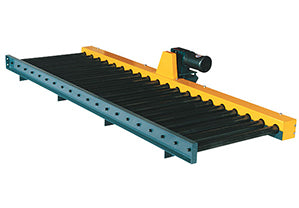
Ball Transfer Table
A manual transfer solution that allows operators to reposition and align loads in any direction.
Best for: workstations, packing areas, and directional transitions
Common loads: cartons, totes, and flat-bottom containers
- Ball spacing can be configured based on load size and weight
- Compact footprint fits easily between conveyor sections
- Ideal for turning products before packing, inspection, or scanning
- 360-degree movement reduces lifting and repositioning strain

Gravity Roller Conveyor
A simple, durable non-powered conveyor that moves loads using gravity or manual push.
Best for: receiving lanes, shipping areas, staging, and low-cost system extensions
Common loads: boxes, totes, and stable items across various weights
- Lower upfront and maintenance cost than powered systems
- Quick to install and easy to reconfigure
- Roller spacing can be matched to product size and weight
- No motors, wiring, or controls required

Gravity Skatewheel Conveyor
A flexible, light-to-medium duty conveyor designed for fast manual handling and adaptable layouts.
Best for: carton flow, packing lines, and seasonal throughput increases
Common loads: small cartons, mailers, totes, and irregular packages
- Ideal for temporary or flexible conveyor setups
- Can be reconfigured or field-cut for changing workflows
- Close axle spacing supports smaller items effectively
- Low rolling resistance reduces operator effort

Lineshaft Driven Live Roller Conveyor
An energy-efficient powered system designed for lighter loads and quiet operation.
Best for: e-commerce, parcel handling, and order consolidation
Common loads: light cartons and totes
- One motor can power long conveyor runs
- Urethane belts reduce noise compared to chain-driven systems
- Minimum-pressure accumulation helps prevent product damage
- Well suited for sortation and packing line integration
Why Conveyor Systems Aren’t Sold “Off the Shelf”
Conveyor systems interact with your layout, product flow, and operational goals. Small differences in load type, spacing, or throughput can significantly impact performance.
- Throughput impacts powered vs gravity decisions
- Load type determines roller spacing and drive method
- Layout affects system type
Real-World Example
A candy wholesaler increased pick rates by 35% and added over 1,000 SKUs by implementing carton flow and gravity conveyor systems.
How to Choose the Right Conveyor System
Choosing the right conveyor system starts with understanding how your products move through your operation. Small differences in load type, layout, or throughput can significantly impact performance, efficiency, and long-term cost.
Load Type
The size, shape, weight, and stability of your product determine which conveyor types will perform reliably.
- Irregular or flexible items (polybags, soft goods) are better suited for belt conveyors
- Pallets and heavy loads typically require chain-driven or heavy-duty roller conveyors
- Cartons and totes work well with roller or belt systems depending on consistency and weight
If loads are unstable, uneven, or vary in size, the conveyor surface and spacing become critical to prevent jams or product damage.
Throughput
Throughput refers to how much product needs to move through your system—and how quickly.
- Irregular or flexible items (polybags, soft goods) are better suited for belt conveyors
- Pallets and heavy loads typically require chain-driven or heavy-duty roller conveyors
- Cartons and totes work well with roller or belt systems depending on consistency and weight
The goal is not just speed—it’s maintaining a consistent flow without bottlenecks or backlogs.
Layout
Your available space and workflow design play a major role in system selection.
- Long, straight runs may favor belt or roller conveyors
- Tight spaces or changing directions may require skatewheel or transfer solutions
- Multi-level operations often benefit from inclines, declines, or vertical integration
Existing structures, such as columns or rack systems, can also influence how conveyors are routed and configured.
Environment
The operating environment affects durability, material selection, and system performance.
- Cold storage or washdown areas may require specialized materials and coatings
- Dust, debris, or moisture can impact roller performance and drive systems
- Noise sensitivity may favor quieter systems like lineshaft-driven conveyors
Environmental factors should be considered early to ensure long-term reliability and reduced maintenance.
Putting It All Together
Most conveyor systems are built using a combination of conveyor types to match different stages of the workflow. The right solution depends on how load type, throughput, layout, and environment work together, not just one factor in isolation.
Share your product details, layout, and throughput goals, and we’ll help configure a conveyor system that fits your operation.
Frequently Asked Questions About Conveyor Systems
Shelving.com helps warehouse, distribution, manufacturing, and fulfillment teams understand conveyor system options, compare gravity and powered solutions, and identify what details are needed before requesting a quote.
Where are conveyor systems commonly used?
+
Conveyor systems are commonly used in receiving, picking, packing, shipping, manufacturing, order fulfillment, distribution, sortation, inspection, and pallet handling areas.
What types of loads can conveyor systems handle?
+
Conveyor systems can be configured for cartons, totes, pallets, drums, containers, packaged goods, and irregular items. The right conveyor type depends on the load’s size, weight, bottom surface, stability, and how it needs to move through the operation.
Can one conveyor system use more than one conveyor type?
+
Yes. Many conveyor systems combine multiple conveyor types. For example, a layout may use gravity roller conveyor for staging, belt conveyor for inclines or irregular products, powered roller conveyor for controlled movement, and ball transfer tables for manual positioning.
How do I know whether I need gravity or powered conveyor?
+
Gravity conveyor can work well for simple movement, staging, and lower-cost extensions where products can move by slope or manual push. Powered conveyor is usually better when loads need consistent movement, controlled spacing, accumulation, or integration with other equipment.
What information is needed to quote a conveyor system?
+
Helpful details include product type, load size, load weight, available space, conveyor length, desired throughput, transfer points, and whether the system needs to connect with packing, sorting, wrapping, scanning, or storage areas.
Can I buy conveyor systems directly online?
+
Most conveyor systems are not standard add-to-cart products because they need to match your layout, load type, workflow, and throughput goals. Shelving.com helps configure the right conveyor system before quoting the equipment.
Conveyor System Resources & Planning Guides
Learn more about conveyor system options for warehouses, fulfillment centers, packing areas, shipping lanes, and material handling layouts. These resources can help you compare powered conveyor, manual transfer, and heavy-duty handling solutions before requesting a quote.
Lineshaft Driven Live Roller Conveyor
Lineshaft driven live roller conveyor is a quiet, energy-efficient powered option for light cartons, totes, parcels, and packaged goods. It is often used in e-commerce, parcel handling, packing, sortation, and order consolidation areas.
View Lineshaft Conveyors →Chain Driven Live Roller Conveyor
Chain driven live roller conveyor is built for heavier loads that need powered movement, synchronized roller control, and durable handling. It is commonly used for pallets, drums, metal bins, containers, and industrial products.
View Chain Driven Conveyors →Ball Transfer Tables for Manual Positioning
Ball transfer tables help operators rotate, align, and reposition cartons, totes, and flat-bottom loads at workstations, packing areas, inspection points, conveyor intersections, and manual transfer points.
View Ball Transfer Tables →Start Your Conveyor System Plan
Tell us what you move, and we’ll help define the right conveyor system.
We Can Help YouStart Your Conveyor System Plan
Tell us what you move, and we’ll help define the right conveyor system.
We Can Help You